When homeowners in Richmond TX, Sugar Land, Katy, and Cinco Ranch start thinking about getting their home’s exterior cleaned, the first question is almost always: “Should I pressure wash it?” And it’s a reasonable question — but it’s actually only half the story.
There are two fundamentally different methods for professional exterior cleaning, and choosing the wrong one for your surface type doesn’t just give you a bad result — it can cause serious, expensive damage. Understanding the difference between soft washing and pressure washing is one of the most useful things a homeowner can know before picking up the phone.
The Core Difference: Chemistry vs. Force
At the heart of it, soft washing and pressure washing use completely different mechanisms to clean a surface.
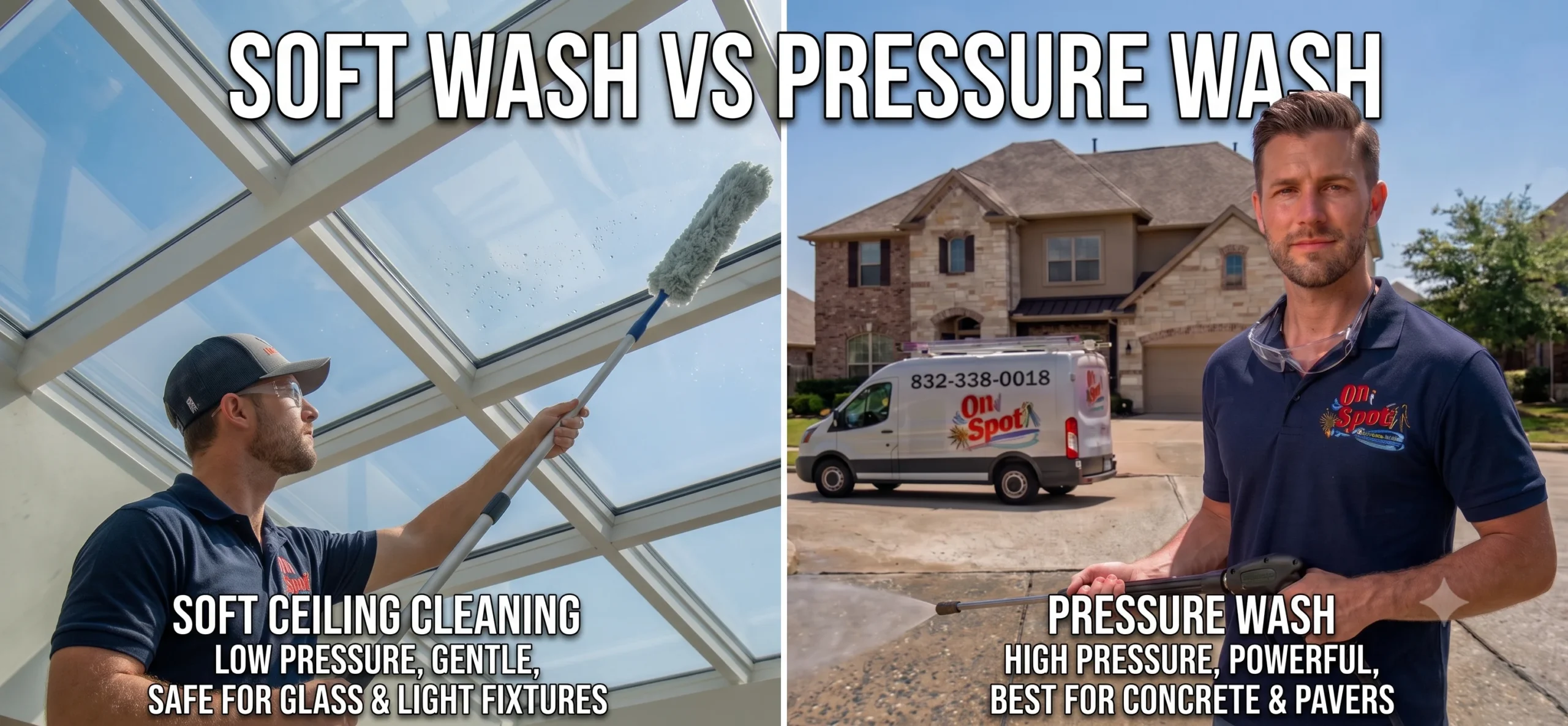
Pressure washing relies on brute force — water delivered at extremely high PSI (pounds per square inch) to physically blast contamination off a surface. Think of it like using a fire hose to clean your driveway. The force of the water does essentially all the work.
Soft washing relies on chemistry. It uses a low-pressure water delivery system — often under 500 PSI, roughly similar to a garden hose — combined with professional-grade biodegradable detergents. Those detergents do the actual cleaning work: killing mold, algae, and bacteria at the cellular level so they can’t grow back quickly, then rinsing clean with gentle water flow.
The Key Insight
With pressure washing, you're removing what's on the surface. With soft washing, you're killing what's causing the problem. That's why soft wash results last 2–3 times longer on organic growth — the algae and mold are dead, not just displaced.
Pressure Levels: How They Compare
To understand the difference visually, here’s how the PSI ranges stack up across cleaning methods and what each is appropriate for:
For context: the siding on most Texas homes is rated to withstand somewhere between 600 and 1,200 PSI before damage risk increases significantly. Standard pressure washing equipment operates well above that threshold — which is exactly why using a pressure washer on the wrong surface causes problems.
What Can Go Wrong When You Pressure Wash the Wrong Surface?
This is where many well-intentioned DIY attempts — and unfortunately some less experienced contractors — create real problems for homeowners. Applying high-pressure washing to surfaces that require soft washing can result in:
Real Damage Risks of Wrong-Method Cleaning
Cracked or blown-out caulking around windows and doors · Water forced behind siding causing hidden mold growth inside walls · Stripped paint or finish on painted wood and stucco · Etched or pitted stucco surfaces that hold more dirt going forward · Granule loss on fascia shortening soffit life · Voided manufacturer warranties on siding and soffit materials · Wood grain raised or splintered on decks and fences
Which Method for Which Surface?
Vinyl & Fiber Cement Siding
High pressure can crack, warp, and force water behind panels. Soft washing removes mold and algae safely without any structural risk.
✅ Use: Soft WashingStucco & Painted Surfaces
High pressure erodes stucco coatings and strips paint. Soft washing with appropriate detergents cleans thoroughly and protects the finish.
✅ Use: Soft WashingHigh pressure splinters wood grain and forces water behind panels. Soft wash cleans wood safely at low pressure with appropriate dwell time.
Natural Stone & Brick Facades
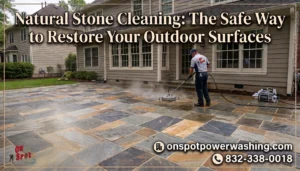
Older brick and natural stone can be damaged by high pressure. Soft washing cleans and preserves mortar joints and stone surfaces without erosion risk.
✅ Use: Soft WashingConcrete Driveways & Walkways
Dense, durable concrete is purpose-built for high-pressure cleaning. Pressure washing removes oil stains, tire marks, and embedded grime efficiently.
💧 Use: Pressure WashingPool Decks & Concrete Patios
Hard concrete surfaces around pools handle high pressure well. For natural stone pool surrounds, soft washing is recommended instead.
💧 Use: Pressure WashingCommercial Parking Lots
Heavy concrete surfaces with oil, grease, and commercial buildup require high pressure. Hot water power washing often used for heavy grease removal.
💧 Use: Pressure / Hot WaterWood Decks & Fences
Wood is tricky — light pressure (under 1,200 PSI) with a wide fan tip is acceptable. High pressure raises wood grain and causes splintering. Many professionals prefer soft washing wood.
⚠️ Use: Light Pressure or SoftHow Long Do the Results Last?
Soft washing with professional detergents kills the biological growth at the cellular level — mold, algae, mildew, and bacteria are eliminated rather than relocated. Because the organic material is dead rather than just displaced, it takes significantly longer to re-establish. In our experience serving Richmond and Fort Bend County homeowners, soft wash results on siding and exterior surfaces typically last 18–24 months compared to 6–9 months for pressure washing alone.
Real-World Comparison from Fort Bend County
A home in Sugar Land with heavy algae on north-facing siding: after pressure washing alone, visible regrowth appeared within 4 months. After professional soft washing with sodium hypochlorite-based detergents and proper neutralization, the same wall remained clean for 22 months. Same home. Same Texas climate. Different method, dramatically different result.
Is Soft Washing Safe for Plants and Landscaping?
This is a concern many Fort Bend County homeowners raise, and it’s a fair one. The short answer is: yes, when performed by a trained professional using properly diluted, biodegradable solutions — and no, it’s not risk-free if done improperly by an untrained operator or as a DIY project.
Professional soft washing technicians follow a specific protocol to protect landscaping:
- Pre-wetting plants: All surrounding vegetation is thoroughly saturated with water before any detergent is applied. This dilutes any chemical contact and protects leaf surfaces.
- Using appropriate dilutions: Professional detergent concentrations are calibrated for the surface being cleaned — not a one-size-fits-all approach.
- Directing runoff away from plants: Experienced technicians manage water flow to minimize chemical contact with landscaping.
- Post-rinse: All surrounding vegetation is rinsed again after the cleaning is complete to remove any residual detergent.
This is one of the strongest arguments for hiring a professional rather than attempting soft washing as a DIY project. Improperly mixed or applied sodium hypochlorite solutions can absolutely damage or kill plants — the professional’s training and equipment makes the difference.
What About Hot Water Power Washing?
There’s a third method worth mentioning that On Spot Power Washing uses for specific commercial applications: hot water power washing. This combines high pressure with heated water — typically up to 200°F — to break down and remove substances that cold water cannot.
Hot water power washing is used for:
- Graffiti removal from brick, concrete, stucco, and metal surfaces
- Heavy oil and grease removal from commercial kitchen exteriors and restaurant areas
- Industrial-grade commercial buildup on parking garages, loading docks, and auto shops
- Gum removal from commercial walkways and plazas
For standard residential cleaning, hot water power washing is generally not required — soft washing or standard pressure washing will handle virtually any residential exterior cleaning situation effectively.
Can You Combine Both Methods in One Job?
Absolutely — and for most complete exterior cleanings, that’s exactly what a professional will do. A comprehensive exterior cleaning for a typical Fort Bend County home might use:
- Soft washing for the house siding, stucco, stone, brick, wood, painted surfaces
- Pressure washing for the concrete driveway, sidewalks, and pool deck
- Light-pressure or soft washing for wood deck, fence, and patio furniture
- Purified water window cleaning for glass surfaces
A professional company like On Spot Power Washing will assess each surface type and apply the appropriate method — you don’t have to figure it out yourself. That assessment is part of what you’re paying for when you hire a trained, experienced exterior cleaning team.
Side-by-Side Comparison
| Feature |  Soft Washing Soft Washing |  Pressure Washing Pressure Washing |
|---|---|---|
| Water pressure used | 100–500 PSI | 1,500–4,000 PSI |
| Cleaning mechanism | Biodegradable chemical detergents | High-force water |
| Best for | Siding, stucco, stone, brick, wood, painted surfaces | Concrete, pool decks, hard surfaces |
| Kills mold at root | Yes — chemically | No — physically removes only |
| Result longevity | 18–24 months typical | 6–9 months typical |
| Surface damage risk | Very low when professional | High on wrong surfaces |
| Safe for fascia | Yes — only safe method | No — voids warranties |
| Eco-friendly | Biodegradable solutions | Water only — no chemicals |
| DIY risk level | High — chemical handling required | Moderate — equipment risk |
Frequently Asked Questions
Pressure washing uses high-force water (1,500–4,000 PSI) to physically blast contamination off surfaces. Soft washing uses low pressure (under 500 PSI) combined with professional biodegradable detergents that kill mold, algae, and bacteria at the cellular level. The chemistry does the cleaning in soft washing — not the water pressure.
Use soft washing on vinyl siding, stucco, painted wood, fiber cement siding, fascia or tiles, natural stone, and brick facades. Use pressure washing on concrete driveways, pool decks, walkways, and other durable hard surfaces. When in doubt, soft washing is the safer choice — the detergents are strong enough to clean any surface without the risk of pressure damage.
Yes, absolutely. High-pressure washing on vinyl siding, stucco, or painted surfaces can crack or blow out caulking around windows, force water behind siding panels causing hidden mold growth inside walls, strip paint and finish coatings, damage stucco, and void your home's warranty. Soft washing eliminates all of these risks by using pressure that is safe for every exterior surface type.
For most home exterior surfaces, soft washing cleans more thoroughly and the results last significantly longer. Because the detergents kill mold and algae at the root rather than just blasting them off the surface, soft wash results on siding and Eave & fascia cleaning typically last 18–24 months compared to 6–9 months for pressure washing alone. The growth comes back much more slowly because it has been chemically eliminated rather than just displaced.
Yes, when performed by a trained professional using properly diluted, biodegradable solutions. Professional technicians pre-wet all surrounding vegetation before washing and rinse thoroughly after — protecting plants from chemical contact. DIY soft washing without proper dilution, application technique, and rinsing protocol can damage or kill plants. This is one of the strongest reasons to hire a certified professional rather than attempting soft washing yourself.
Not Sure Which Method Your Home Needs?
On Spot Power Washing will assess every surface and apply the right method. Serving Richmond, Sugar Land, Katy, Cinco Ranch & all of Fort Bend County. Fully insured, 5-star rated.
📞 Call now: (832) 338-0018