
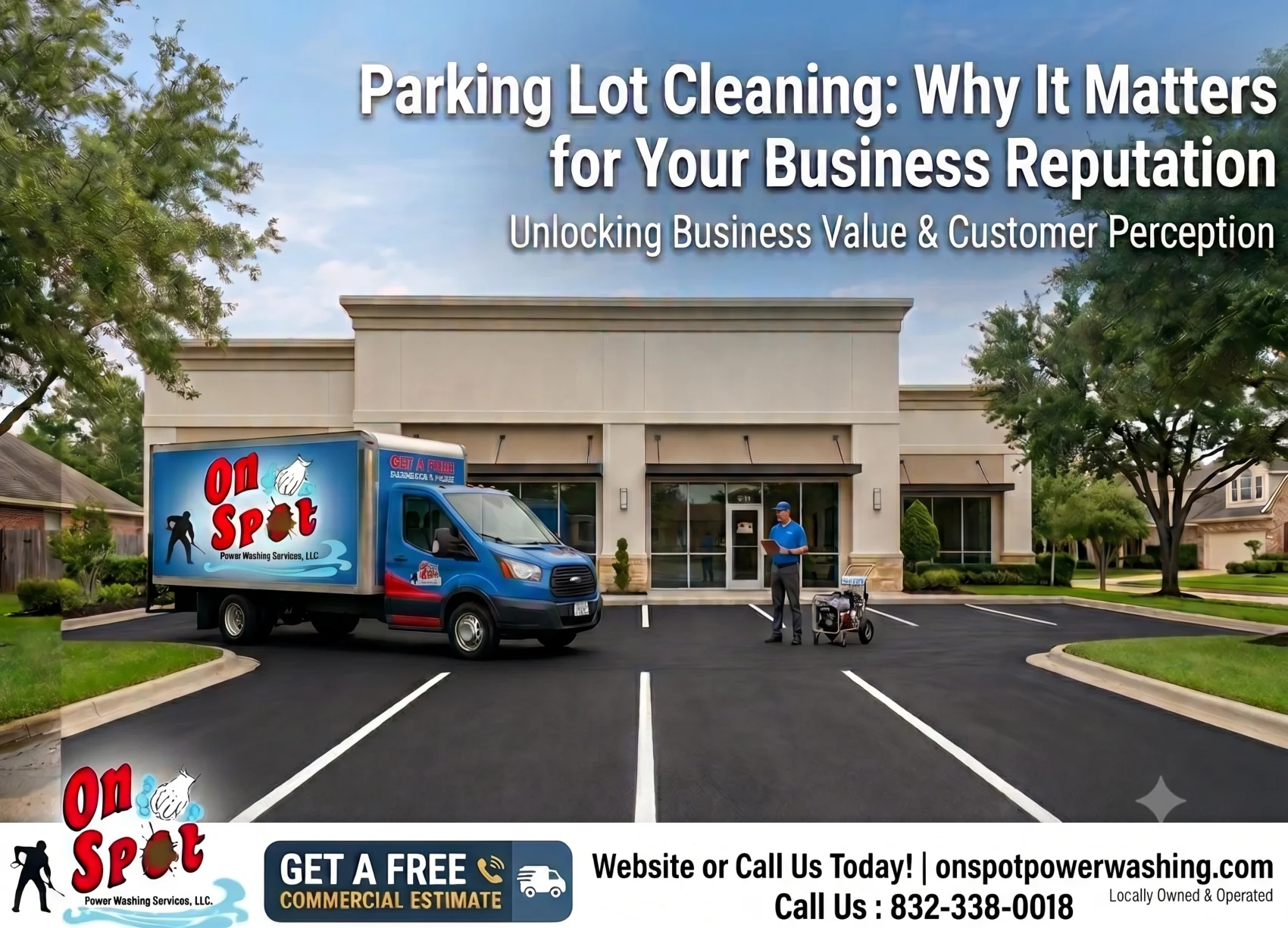
Before a customer walks through your front door, before they see your signage, before they interact with a single member of your team — they park their car. The parking lot is the literal first point of physical contact between your business and every customer, vendor, and potential employee who visits your property. And in Fort Bend County’s competitive business corridors — along US-90, Highway 6, the Grand Parkway, and US-59 — it’s a moment that happens thousands of times a year.
Research on consumer behavior is unambiguous: the physical environment of a business — including its parking lot — directly influences customer perception of quality, trustworthiness, and value. A clean, well-maintained parking lot doesn’t just look better. It drives real business outcomes: higher customer confidence, stronger conversion rates, reduced liability exposure, and a reputation that compounds positively over time.
💡 The Fort Bend County Business Context
Fort Bend County is one of the fastest-growing business markets in Texas, with new commercial development along every major corridor. In this environment, established businesses compete directly with newer, cleaner-looking developments for the same customer base. A neglected parking lot is a competitive disadvantage — not just an aesthetic issue — when the new retail center down the road has a spotless lot and fresh striping.
How Your Parking Lot Affects Customer Perception
The psychology of first impressions is well-documented — and parking lots trigger immediate, subconscious judgments that customers carry into every subsequent interaction with your business:
The Halo Effect — Clean = Quality
Consumers apply the “halo effect” to businesses: when one aspect of an experience is positive, they rate other aspects more positively too. A clean, well-maintained parking lot sets a positive halo before the customer enters — making them more likely to perceive your products, staff, and service as higher quality. A dirty lot triggers the reverse: doubt before the first word is exchanged.
Online Reviews Mention Parking Lots
Google, Yelp, and social media reviews of Fort Bend County businesses regularly mention parking lot condition — particularly oil stains, debris, and general cleanliness. These mentions influence potential customers who have never visited your location. A pattern of negative parking lot comments in reviews creates a documented reputational issue that actively deters new customers.
Drive-By Decisions
For retail businesses, restaurants, and service providers, a significant portion of customers make snap decisions at drive-by speed — they drive past, see the lot, and either pull in or keep driving. A stained, debris-covered, or algae-marked lot is a drive-by conversion killer that no amount of interior quality or marketing can compensate for.
Repeat Customer Retention
Regular customers notice changes in property maintenance — and a deteriorating parking lot signals to loyal customers that standards are slipping. Customer retention is directly connected to physical environment standards: customers who feel proud to be seen at your location visit more frequently and recommend more readily than those who feel the location is declining.
The Business Case for Regular Parking Lot Cleaning
Reduces Slip-and-Fall Liability Exposure
This is the most immediate and legally significant reason to maintain a clean parking lot. Algae, mold, and biological growth on concrete creates genuinely dangerous slip-and-fall conditions — particularly during and after rain events throughout Fort Bend County’s storm season. Commercial property owners bear significant legal liability for injuries sustained on their premises due to known or knowable hazardous conditions. Oil-slicked concrete near parking areas is a particularly high-risk surface. Documented regular professional cleaning creates a proactive maintenance record that is valuable in defending any premises liability claim.
Protects Your Concrete Investment
Commercial parking lot concrete represents a substantial capital investment — typically $3 to $8 per square foot, meaning a standard parking lot costs $30,000 to $150,000+ to install. Oil and automotive fluid contamination chemically attacks concrete over time, accelerating surface deterioration and reducing the effective lifespan of the pavement. Regular professional cleaning at a fraction of repair costs removes contamination before it penetrates the concrete’s pore structure — extending the maintenance cycle and delaying expensive resurfacing.
Supports Lease and Health Code Compliance
Commercial leases frequently include exterior maintenance clauses that tenants are required to comply with — including parking lot cleanliness standards. Restaurants and food service businesses face health code scrutiny that extends to exterior areas including parking lots, dumpster enclosures, and drive-through surfaces. Regular documented cleaning satisfies lease and regulatory requirements proactively and creates a defensible record if compliance questions arise from a landlord or inspector.
Preserves Line Striping Visibility and Safety
Parking lot line striping serves critical safety and organizational functions — directing traffic flow, defining accessible parking spaces, and marking fire lanes. Oil contamination, algae growth, and general grime buildup obscure line striping significantly faster than the lines themselves fade. Clean, clearly visible striping reduces on-lot accidents, ensures ADA accessibility compliance, and contributes to the overall professional appearance of your property.
Demonstrates Environmental Responsibility
Automotive fluids — motor oil, transmission fluid, coolant, and brake fluid — that accumulate in commercial parking lots are environmental contaminants. Without regular professional cleaning, these fluids wash into storm drains during rain events, entering the local watershed. Professional pressure washing uses controlled wastewater containment — collecting contaminated water rather than allowing it to enter storm drains — making it a significantly more responsible approach than letting rain disperse contamination into the Fort Bend County watershed.
Supports Property Value and Tenant Retention
For commercial property owners and landlords, parking lot condition is a documented factor in tenant retention and lease renewal decisions. Tenants whose customers regularly experience a dirty or hazardous parking lot raise maintenance complaints, negotiate lower renewal rates, and in some cases relocate to better-maintained properties. A consistently clean parking lot supports premium lease rates, attracts higher-quality tenants, and contributes positively to the property’s assessed value and marketability.
How Often Should Fort Bend County Parking Lots Be Cleaned?
Cleaning frequency should match the contamination rate — which varies significantly by business type, traffic volume, and proximity to food service or automotive operations:
| Business Type | Recommended Frequency | Primary Contaminants | Key Concern |
|---|---|---|---|
| Restaurants and drive-throughs | 🔴 Monthly | Grease, food debris, organic waste, high foot traffic | Health code compliance; slip hazards near drive-through |
| Retail strip centers | 🔴 Monthly to Bi-Monthly | Oil stains, algae, shopping cart debris, general grime | Customer first impression; drive-by conversion |
| Auto dealerships and service centers | 🔴 Monthly | Heavy oil, fluid leaks, tire marks, industrial residue | Surface protection; professional image for high-value purchases |
| Medical and healthcare facilities | 🔴 Monthly to Quarterly | General contamination, biological growth, patient-facing cleanliness | Patient and visitor safety; regulatory expectations |
| Office parks and corporate campuses | ⚠ Quarterly | Oil, algae, environmental film, seasonal debris | Tenant expectations; professional standard for employee-facing spaces |
| Retail warehouses and big-box | ⚠ Quarterly to Semi-Annual | Heavy oil, forklift fluid, high-traffic concrete degradation | Surface protection; ADA compliance in high-traffic accessible areas |
| Hotels and hospitality | ⚠ Quarterly | Oil, algae, guest-facing cleanliness standards | Online review mentions; guest first impression on arrival |
| Light commercial and professional services | ✅ Semi-Annual | Oil, biological growth, general grime | Professional presentation; lease maintenance requirements |
⚠️ The Post-Storm Cleaning Opportunity
Fort Bend County’s active storm season (June through September) deposits significant organic debris, soil, and biological material on parking lot surfaces after every major weather event. Post-storm parking lot cleaning within 24 to 48 hours — before organic debris establishes biological growth in the concrete’s pores — is one of the most cost-effective single cleaning investments a Fort Bend County business can make. Debris that sits for weeks in Texas heat accelerates biological colonization and staining that requires significantly more effort to address.
What Professional Parking Lot Cleaning Covers
- Oil and automotive fluid stain treatment. Hot water pressure washing with professional degreasers breaks down and removes motor oil, transmission fluid, and other automotive contamination that cold water cannot address
- Biological growth removal. Algae, mold, and organic growth on parking lot concrete — particularly in shaded areas and near drainage points — creates slip hazards and concrete-attacking organic acids
- Tire mark and rubber deposit removal. High-traffic entry and exit areas accumulate rubber deposits that darken the concrete surface and contribute to slipping hazards during rain
- Gum and adhesive removal. High foot traffic areas — particularly near entrances — accumulate gum and adhesive deposits that are difficult to remove and signal poor maintenance to customers
- Storm debris clearance. Post-storm organic debris including leaves, mulch, and organic material that stains concrete and feeds biological growth if not removed promptly
- Dumpster enclosure and loading dock areas. The highest contamination-density areas on most commercial properties — requiring hot water, degreasers, and regular attention to maintain health code compliance and odor control
- ADA accessible pathway cleaning. Accessible parking spaces, curb cuts, and pathways must be kept free of slip hazards — professional cleaning ensures these high-priority areas meet safety standards
✅ The Fort Bend County Business Reputation Standard
In a county growing as fast as Fort Bend, the competitive bar for commercial property presentation rises every year. New developments along the Grand Parkway and US-59 corridors bring fresh, professionally maintained parking lots into direct competition with established businesses. A regularly cleaned parking lot is no longer a premium differentiator — it’s the baseline expectation for any Fort Bend County business that takes its customer experience, liability exposure, and physical asset value seriously. Schedule professional parking lot cleaning before the next busy season — and let the results speak in every customer’s first impression.
Frequently Asked Questions
Most commercial parking lots in Fort Bend County benefit from professional pressure washing every 3 to 6 months. High-traffic retail, restaurant, and healthcare parking areas may need monthly or quarterly cleaning due to faster accumulation of oil, grease, biological growth, and debris. Fort Bend County's subtropical climate means biological growth on parking lot concrete is active year-round — making more frequent cleaning necessary than in drier climates.
Professional parking lot pressure washing removes: oil and automotive fluid stains, algae and biological growth that creates slip hazards, tire marks and rubber deposits, chewing gum, organic debris accumulation, grease near dumpster and loading areas, storm debris, and general environmental grime that builds up over time. Hot water pressure washing is particularly effective for oil and grease removal that cold water cannot address.
Yes — significantly. Algae, mold, and biological growth on parking lot concrete and walkways creates slip-and-fall hazards that expose commercial property owners to premises liability claims. Oil and grease near high-traffic areas is particularly hazardous. In Texas, commercial property owners have a legal duty to maintain safe premises for customers and visitors. Documented regular professional cleaning creates a record of proactive hazard management that is valuable in defending any liability claim.
Yes — and professional pressure washing is the recommended preparation step before any parking lot striping or line painting. Paint applied to a clean, properly prepared surface adheres significantly better, produces sharper lines, and lasts substantially longer than paint applied to a dirty or contaminated surface. On Spot Power Washing provides parking lot cleaning as a preparation step for striping projects throughout Fort Bend County.
Commercial parking lot cleaning in Fort Bend County is priced based on the square footage of the lot, the level of contamination (particularly oil and grease accumulation), and any specialty cleaning requirements (dumpster areas, drive-throughs). Small retail parking areas typically start at $150 to $400. Larger commercial lots and multi-building parking structures are quoted based on square footage assessment. On Spot Power Washing provides free commercial estimates — call 832-338-0018.
Commercial Parking Lot Cleaning — Fort Bend County
On Spot Power Washing provides professional parking lot cleaning throughout Richmond TX, Sugar Land, Katy, Missouri City, and all of Fort Bend County. Off-hours scheduling, fully insured with commercial liability coverage, free estimates.
Request Commercial Quote 📞 832-338-0018